Predictive and on-site surveys
Model coverage and capacity, measure the real RF environment and locate interference.
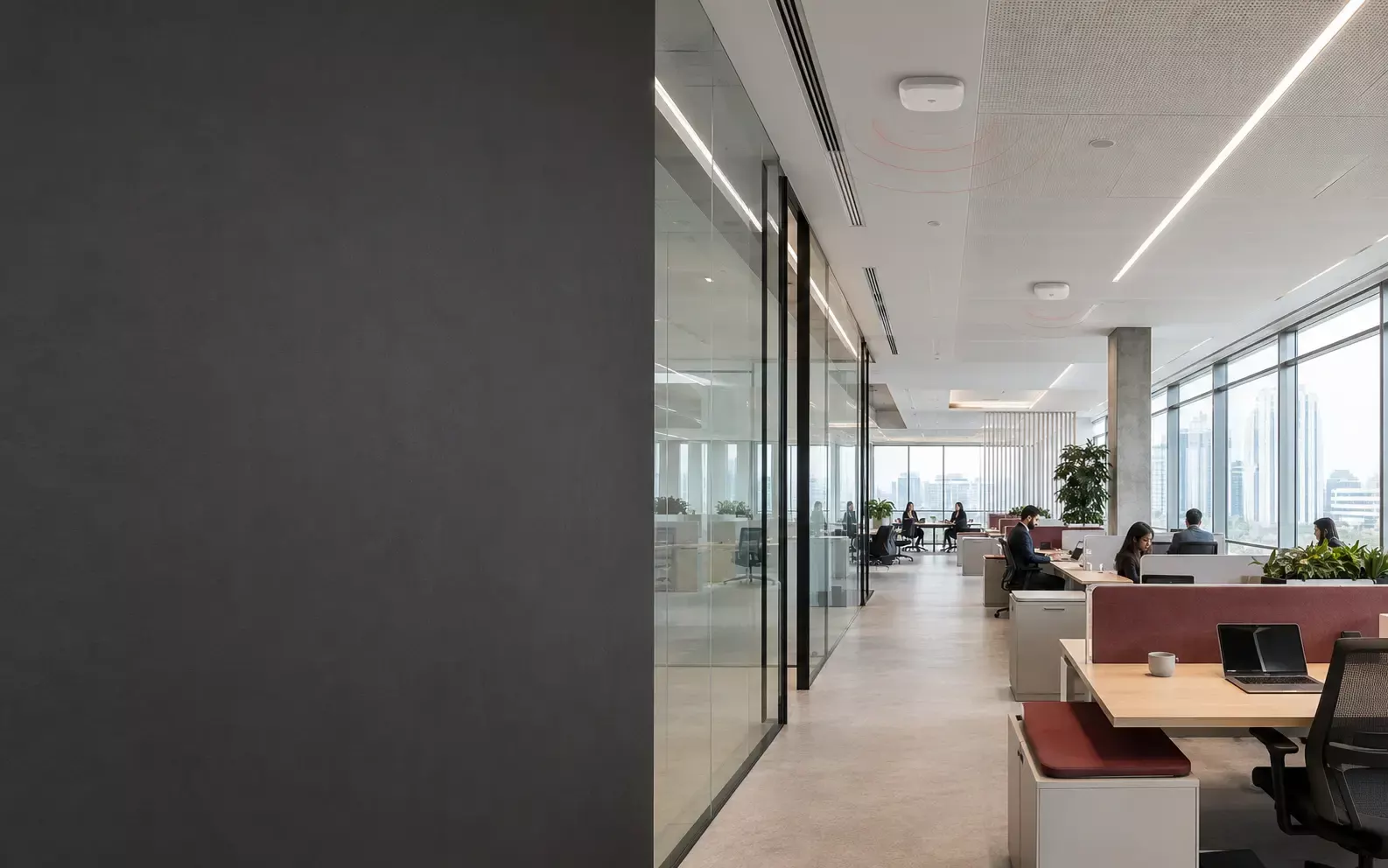
Deliver secure, predictable wireless access across offices, campuses, hospitality, healthcare and high-density venues with coverage and capacity proven by survey.
Technology partnerships









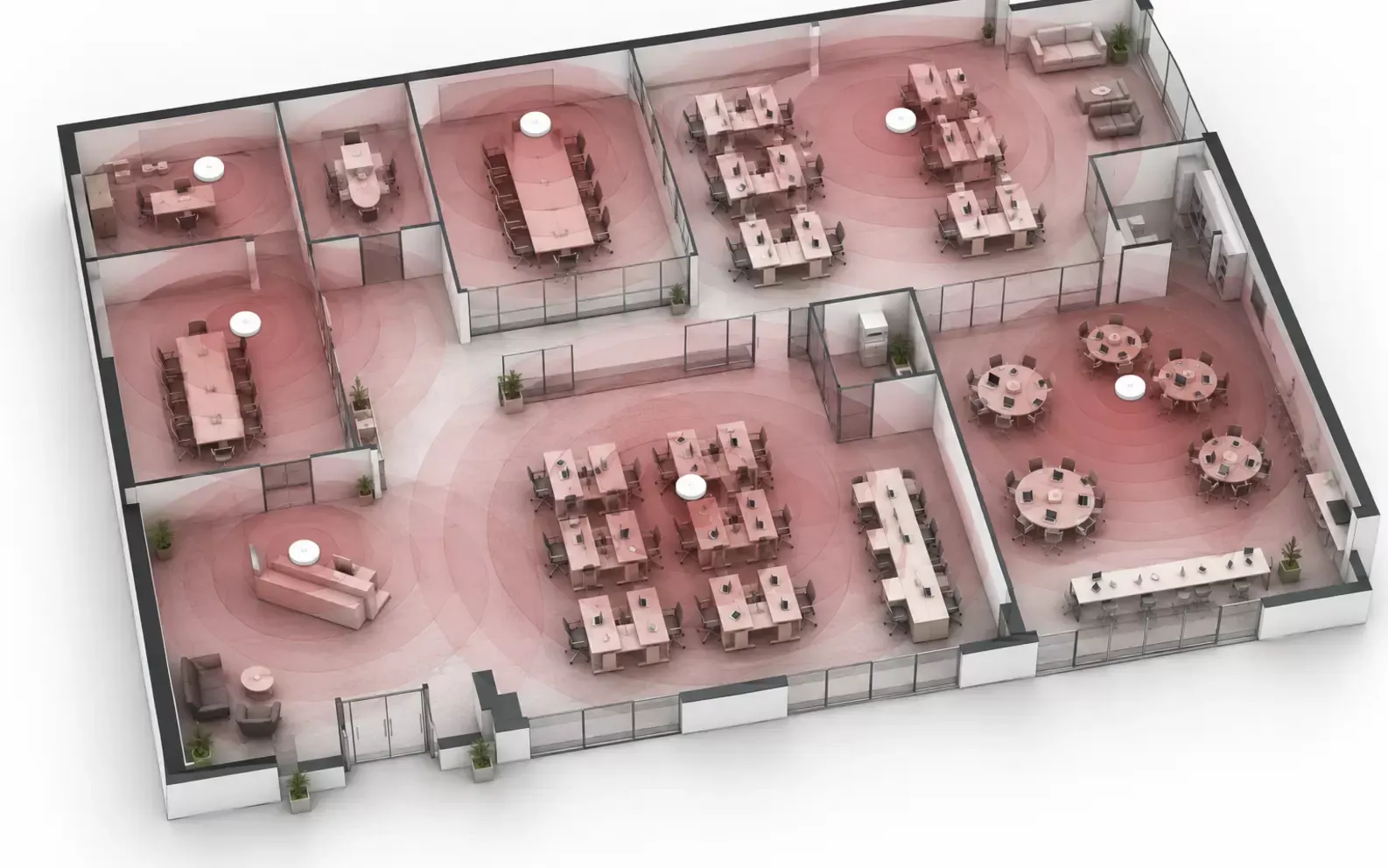
Wi-Fi performance depends on radio frequency conditions, building materials, channel reuse, interference, client capabilities, application demand and the wired network behind each access point. Adding more access points without design can create contention and unstable roaming.
Usable primary coverage at the intended device locations.
Acceptable signal-to-noise ratio and controlled interference.
Enough airtime, channels and wired throughput for peak demand.
Roaming behavior that supports voice, collaboration and moving users.
Model coverage and capacity, measure the real RF environment and locate interference.
Plan AP placement, bands, channels, power and density around clients and applications.
Integrate identity, certificates, guest portals, device policy, NAC and appropriate isolation.
Test voice, collaboration, scanners and mobile workflows along real movement paths.
Map spaces, users, devices, applications and security.
Create predictive coverage, capacity and channel design.
Measure attenuation, interference and mounting conditions.
Install, configure, integrate and tune the platform.
Test coverage, quality, roaming, access and applications.
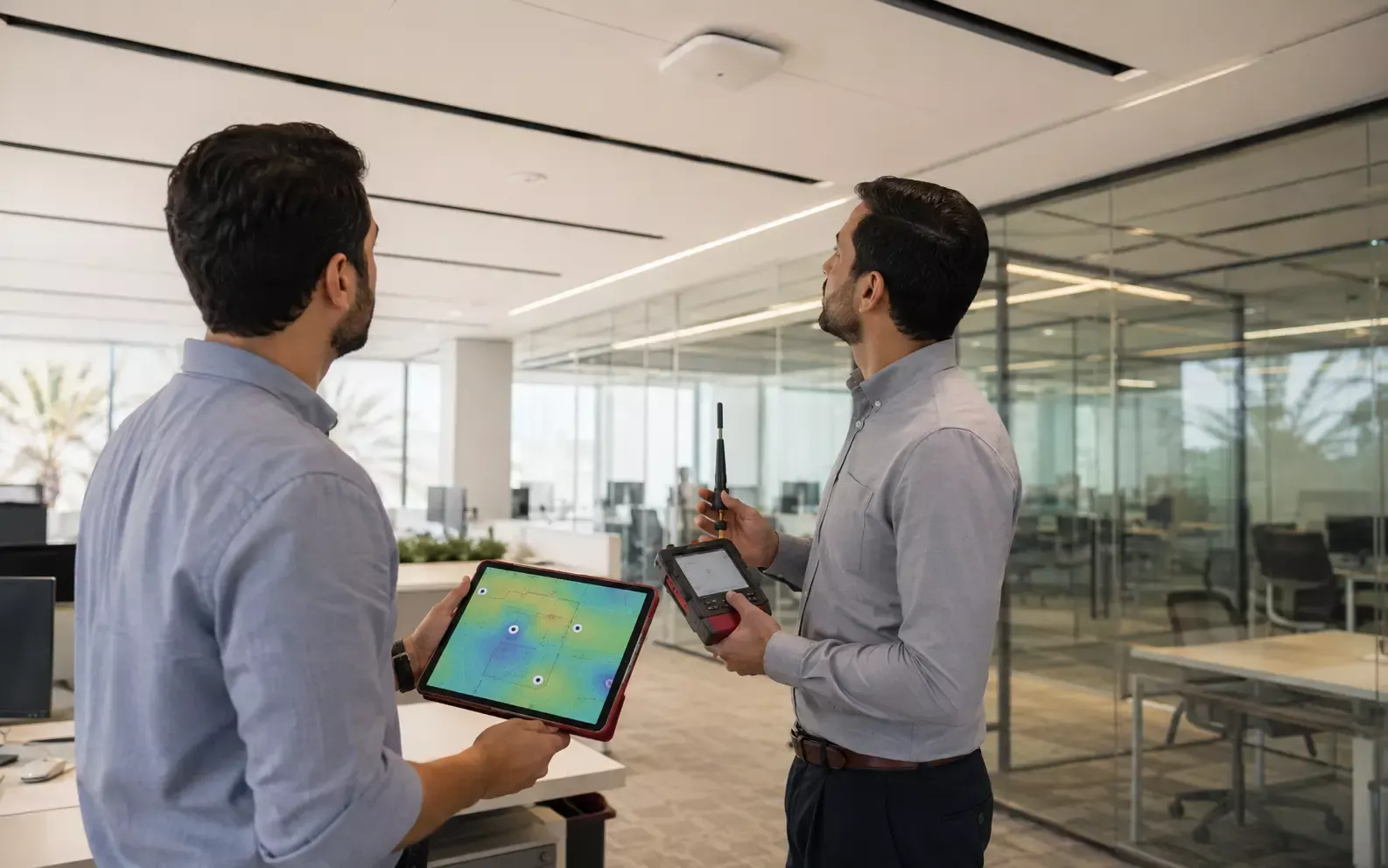
Client experience is affected by the RF environment, device behavior, authentication and every wired dependency behind the access point.
Too many nearby radios on the same channel compete for airtime and reduce usable capacity.
A strong signal can still serve too many users or high-bandwidth applications.
Sticky clients, coverage gaps and inconsistent authentication interrupt voice and collaboration.
Guest, contractor, corporate and IoT devices need different identity and segmentation policies.
Access-point uplinks, PoE and core capacity can limit modern wireless performance.
RF statistics need client, authentication and application context to support troubleshooting.
A predictive survey models RF behavior from floor plans, materials and requirements. An on-site survey measures actual signal, noise, interference and attenuation. Strong projects use prediction for design and measurements for refinement and validation.
The answer depends on floor plan, materials, user and device density, applications, channel plan, bands and client capabilities. AP count should come from coverage and capacity design, not a fixed square-metre ratio.
It may be suitable where supported clients, high throughput, low latency and long platform life justify it. Wi-Fi 6 or 6E can still be appropriate. emtech checks spectrum, devices, cabling, PoE, uplinks and application needs.
Yes. Assessment can include RF survey, controller health, channel and power settings, AP placement, client experience, authentication, wired dependencies and support status.
Guest access can use an isolated network, controlled internet policy, captive portal or sponsored access, rate limits, logging and separation from internal resources, aligned to business and applicable requirements.
Coverage gaps, sticky clients, authentication delay, channel design or application settings can interrupt roaming. emtech tests the end-to-end voice or collaboration journey rather than signal strength alone.
Most enterprise APs use Power over Ethernet. The switch must support the AP’s power class, total budget and desired link speed. Newer high-performance APs may require higher PoE and multigigabit ports.
Scope can include signal and quality maps, channel checks, interference, authentication, guest access, roaming, throughput, critical applications, wired path and acceptance reporting.
Request a Wi-Fi discovery session. emtech will review spaces, users, devices, applications, security and wired readiness before proposing an RF design.
