A qualified engineer works at the customer location on an agreed schedule to own daily technical tasks, coordinate incidents and maintain an accurate operational record.
Resident and scheduled IT support · UAE
Put accountable IT ownership inside the workplace.
emtech On-Site Engineer services give UAE organisations a skilled technical resource for daily support, preventive operations and hands-on infrastructure tasks—backed by emtech specialists when deeper expertise is required.
Customer-site presence Ticketed ownership Specialist escalation

Technology partnerships









Connecting your business with global technology expertise
Physical devices, rooms, cabling and user support.
Tickets, checks, approvals and documentation.
Escalation to remote L2, L3 and vendor expertise.
A day with operational rhythm
Useful site presence is planned, recorded and reviewed.
The exact schedule follows the agreed service scope, but a disciplined day balances user demand with preventive work and operational follow-through.
Handover
Review open tickets, overnight events, planned changes and priority users.
Service check
Verify agreed network, server, backup, meeting-room and endpoint indicators.
User queue
Resolve onsite incidents and requests with documented outcomes.
Planned work
Complete approved checks, updates, installs, moves or preventive tasks.
Specialist action
Package evidence and coordinate deeper technical or vendor involvement.
Shift record
Update tickets, risks, pending approvals, inventory and next actions.
Practical service domains
Hands-on support across the workplace technology stack.
Final activities depend on engineer level, customer standards, privileged access, vendor support and the responsibilities agreed in the statement of work.
Users & endpoints
Device setup, troubleshooting, peripherals, meeting rooms and approved software support.
Servers & infrastructure
Health checks, hardware coordination, approved maintenance and local hands support.
Network & Wi-Fi
Connectivity checks, access-point and switch support, cabling context and escalation.
Monitoring & maintenance
Review agreed alerts, perform preventive checks and track recurring operational issues.
Cloud administration
Approved Microsoft 365 or cloud operational tasks within defined role permissions.
VPN & remote access
User connectivity support, client checks, authentication context and secure escalation.
Email support
Mail client, access and policy-related user support; threat investigation needs security scope.
Virtualisation & backup
Operational checks, approved tasks and restoration coordination under defined runbooks.
Coverage by business needEmbedded model Planned model Flexible model
Choose presence around workload—not a generic headcount.
emtech aligns engineer level, schedule and escalation with the site's demand, technology and criticality.
Resident engineer
Consistent day-to-day ownership at the customer location for environments with sustained support demand.
- Best suited for
- Busy offices, critical sites, complex user communities
- Strength
- Continuity, local context and proactive task ownership
- Define carefully
- Hours, engineer level, leave cover and escalation
Scheduled site visits
Recurring preventive and support visits for sites that need physical presence but not continuous staffing.
- Best suited for
- Smaller offices, branches, periodic maintenance
- Strength
- Predictable site care with remote support between visits
- Define carefully
- Visit frequency, task list and urgent-call path
Dispatch support
On-demand field assistance for approved incidents, deployments, moves or vendor coordination.
- Best suited for
- Multi-site estates and intermittent physical tasks
- Strength
- Targeted presence without permanent staffing
- Define carefully
- Coverage area, lead time, spares and access
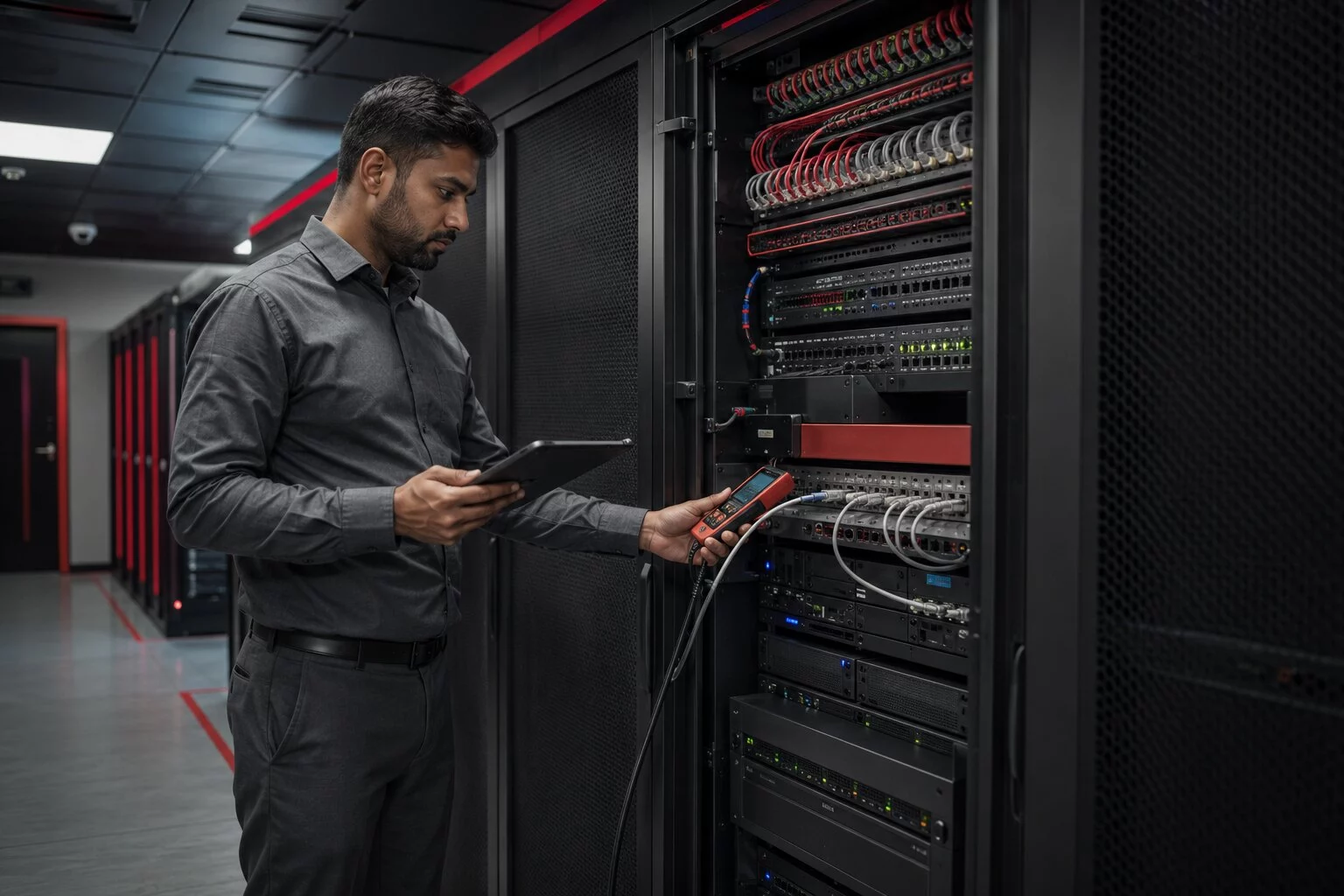
Physical context matters
Some problems cannot be solved through a remote session.
On-site engineering closes the gap between remote diagnosis and the physical environment: power, cabling, rooms, devices, users and local vendors.
Observe the real conditionInspect indicators, cabling, power, placement, noise, damage and user behaviour.
Execute approved hands-on workReplace, reconnect, stage or validate equipment according to scope and authority.
Capture useful evidenceDocument photos, serials, topology context, test outcomes and local constraints.
Coordinate specialists and vendorsProvide accurate local assistance while remote experts guide deeper investigation.
Ticket and shift discipline
Presence becomes measurable through the operating record.
A shift log should highlight what changed, what remains risky and what requires a decision—not merely list activity.
Open-incident handoverTwo user cases and one carrier dependency reviewed
ReviewedMeeting-room validationAudio, display and network path tested before executive session
CompleteWi-Fi degradationEvidence collected and escalated to network specialist
EscalatedApproved server taskPre-check, execution and post-check recorded
ValidatedDaily closureRisks, pending approvals and next actions shared
Reported Safe and governed execution
Site access should never bypass operational control.
Engineer presence adds speed only when permissions, approvals, safety and evidence are designed into the service.
Named access
Individual accounts, least privilege and time-bound access aligned with role and task.
Change approval
Standard, normal and emergency change paths with clear authorisation.
Safety & site rules
Facilities, equipment-room, escort, power and customer safety requirements.
Evidence & closure
Ticket chronology, asset updates, test results, rollback and business validation.
Engineer onboarding01 02 03 04 05
A measured path from requirement to productive site ownership.
The role is designed around the environment before the engineer is placed into daily operations.
Discover
Review users, locations, demand, assets, technology, risks and support history.
Role design
Set engineer level, schedule, task boundaries, service targets and escalation.
Access & knowledge
Prepare accounts, site induction, documentation, runbooks and contacts.
Transition
Shadow, validate tasks, confirm ticket flow and close knowledge gaps.
Review
Measure demand, outcomes, recurring issues, capacity and improvement priorities.
Better user experience
Technical support should feel close without becoming informal.
An approachable engineer can reduce friction, but every request still follows appropriate identity, approval, security and ticket controls.
Context-rich communicationUnderstand the user's business moment and explain the next action clearly.
Secure verificationDo not trade access control for convenience when the requester is physically present.
Expectation managementState ownership, priority, dependencies and the next update point.
Knowledge improvementConvert repeat questions into approved guides, fixes and preventive actions.
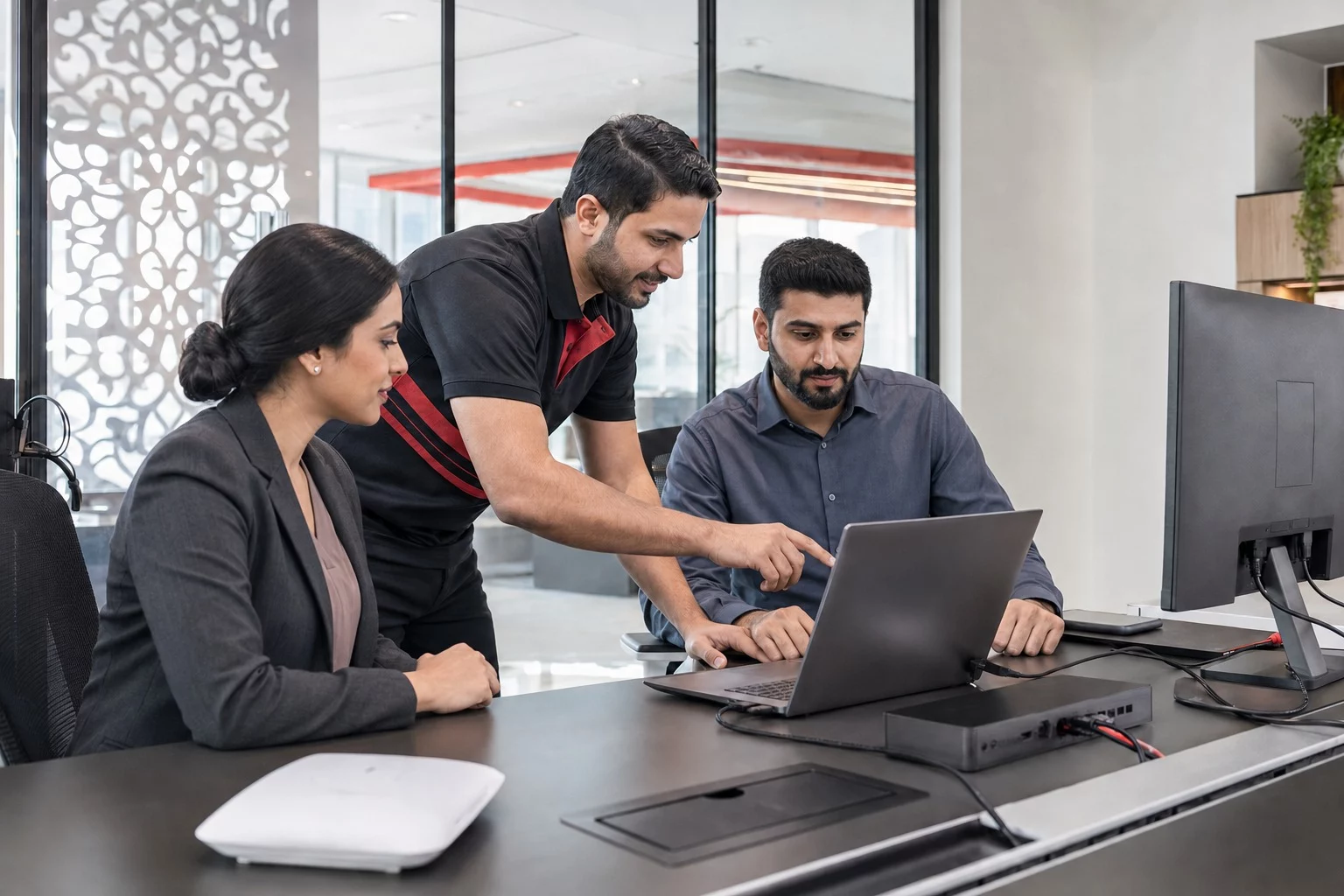
Start with role clarity
What you receive from an on-site support assessment.
A practical staffing and operating recommendation based on demand—not a generic engineer profile.
Demand profileUsers, tickets, sites, hours and recurring tasks.
Skill-level recommendationL1, L2, L3 access and escalation requirements.
Coverage modelResident, scheduled or dispatch options.
Scope and boundariesIncluded tasks, exclusions and approvals.
Escalation designRemote specialists, vendors and customer owners.
Transition planAccess, knowledge, induction and review gates.
Frequently asked questions
On-Site Engineer service questions answered.
What does an emtech on-site IT engineer do?
The engineer performs the user, endpoint, network, server, cloud-administration and preventive tasks specifically included in the statement of work, records work in tickets and escalates beyond the assigned skill or authority.
Is the engineer available full time?
emtech can propose resident, scheduled-visit or dispatch models. Hours, days, location, engineer level, leave cover and after-hours escalation are agreed in the service contract.
What is the difference between on-site and remote support?
Remote support resolves tasks that can be handled securely through remote tools. On-site support addresses users, rooms, devices, cabling, power and other physical context. Effective services combine both.
Can one engineer support every technology?
No individual should be presented as expert in every platform. emtech defines the engineer level for expected daily work and uses a documented escalation path for deeper network, cloud, server, backup or security expertise.
Can the engineer manage Microsoft 365 or cloud servers?
Approved operational tasks can be included when the engineer has the appropriate skill and least-privilege role. Architecture, high-risk changes and specialist incidents follow escalation and change control.
Are cybersecurity tasks included?
Basic secure configuration, user assistance and operational checks may be included. Threat monitoring, forensic investigation and cyber incident response require a defined cybersecurity or SOC service.
How is engineer performance measured?
Measures can include ticket ownership, response and resolution performance within scope, backlog, repeat incidents, preventive-task completion, documentation quality, user feedback and improvement actions.
What happens when the engineer is on leave?
Leave coverage is designed in the service proposal. Options depend on contracted schedule, required skill, notice and whether remote or temporary on-site cover is appropriate.
Can emtech support multiple UAE sites?
Yes. Coverage may combine resident resources at key locations, scheduled branch visits, dispatch support and central remote escalation, subject to location, access and service targets.
How is pricing determined?
Pricing depends on engineer level, hours, locations, coverage model, task scope, access requirements, after-hours support, replacement coverage and specialist escalation. emtech quotes after assessment.
Research sources
Service design aligned with current service-management practice.
Give your workplace a clear technical owner—with specialist depth behind them.
Start with demand, skill level, service hours, site conditions and the escalation model your business actually needs.
